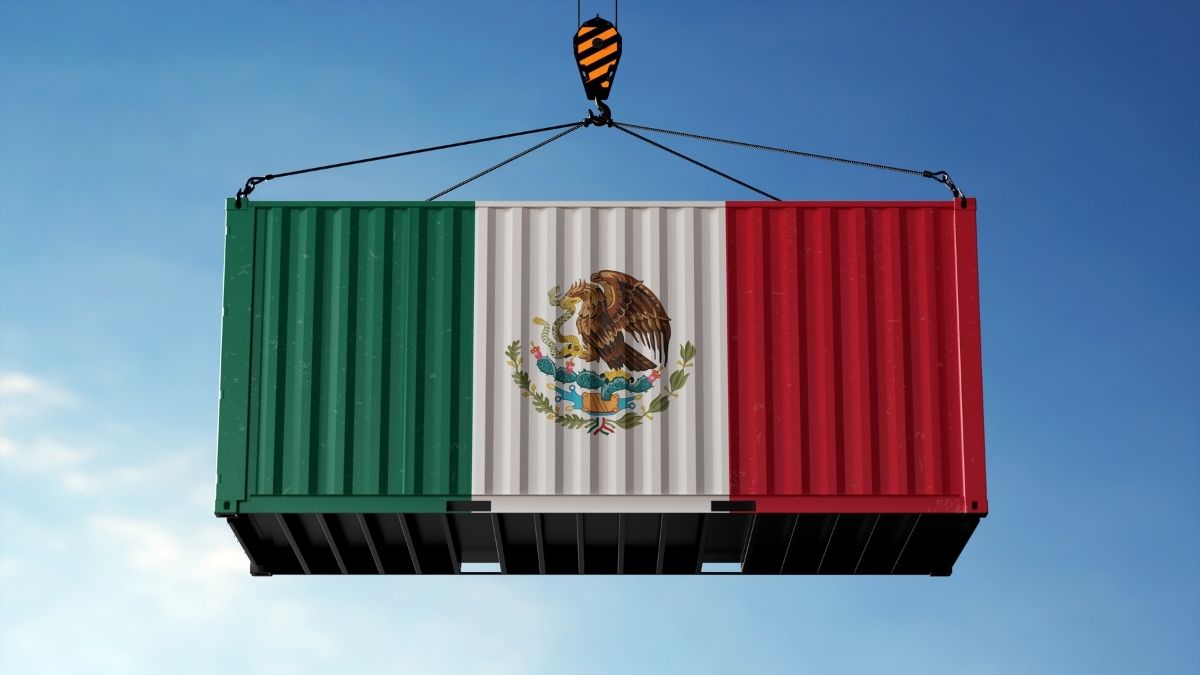
Supply chains are often treated as downstream functions—reacting to decisions made elsewhere. But in today’s environment, freight markets, trade policy, and sourcing shifts are among the earliest indicators of broader economic change. Nowhere is that clearer than automotive: a just-in-time, high-value, cross-border network with near-zero tolerance for disruption. When stress shows up here, it’s rarely isolated—and increasingly, the same forces are shaping supply chains across industries.
C.H. Robinson recently hosted our third annual automotive customer summit in conjunction with Michigan State University, where we invited automotive OEMs, suppliers, and aftermarket, as well as students and faculty to discuss the latest supply chain trends and solutions.
Here’s what we learned and why automotive can teach the rest of the market:
Automotive supply chains operate under tighter constraints than most industries—but the gap is closing.
More shippers are now dealing with:
- Cross-border complexity
- Margin pressure
- Volatile input costs
- Elevated service expectations
What works in automotive like scenario planning, visibility, procurement discipline, and integrated execution, works elsewhere because the problems are becoming universal.
The organizations that recognize this early will be better positioned to operate through uncertainty, not just survive it.
1. The freight market is highly fragmented
At first glance, freight demand looks muted. Manufacturing employment is down year over year, despite March having the largest monthly job gain of 2026. Housing-related freight remains soft. Retail signals are mixed. But under the surface, demand is redistributing, not disappearing. While traditional manufacturing and housing-linked freight are cooling, other sectors are accelerating:
- Data center construction continues to surge
- Electronics, machinery and high-technology exports out of Mexico are rising
- Maintenance, aftermarket, and service-driven freight is holding firm
- Seasonal ramp-up of produce is tightening reefer capacity
At the same time, trucking payrolls and authorities in dry van are flat, signaling tightening capacity in unexpected pockets even as overall demand remains uneven.
The result is a market where national averages can be misleading. Shippers are seeing volatility lane by lane, week by week, rather than broad shifts across the network.
What leading shippers are doing differently:
- Monitoring transit time and service reliability weekly, not quarterly
- Isolating volatile lanes instead of renegotiating entire networks
- Treating disruption as operational reality, not exception
This is not just automotive challenge. Fragmentation is becoming the defining feature of freight markets across industries.
2. Executable rates are replacing paper rates as the new benchmark
In periods of uncertainty, shippers often try to anchor on price. But recent volatility, especially around fuel, has made one thing clear: rate integrity matters more than rate optics.
Shippers are encountering scenarios where:
- Carriers request sudden double-digit increases
- Fuel surcharges lag rapid price movements
- Attractive paper rates fail under real-world conditions
The most effective procurement teams are adjusting their approach. Rather than assuming all increases are unreasonable or just accepting them, they’re validating execution.
That means:
- Testing carriers on a limited set of lanes before scaling awards
- Evaluating spot and contract dynamics together, not separately
- Tracking linehaul and fuel independently to understand true cost drivers
The shift from price negotiation to execution discipline is gaining traction well beyond automotive.
3. Fuel has become a structural risk, not a pass-through cost
Fuel volatility is no longer a secondary consideration. It’s influencing carrier behavior, pricing discipline, and capacity availability in real time.
Higher diesel prices don’t just raise costs, they:
- Compress carrier margins
- Alter routing decisions
- Expose the limitations of traditional fuel surcharge mechanisms
Even when fuel is technically reimbursed, timing lags and operational inefficiencies create meaningful risk.
Leading shippers are responding by:
- Treating fuel as a shared risk rather than a negotiation lever
- Prioritizing consistent freight patterns over short-term rate wins
- Communicating proactively with carriers to preserve network stability
In uncertain markets, relationships and predictability can drive better outcomes.
4. Cross-border complexity is accelerating, especially in North America
As sourcing continues to shift away from China and toward a mixed sourcing hierarchy of “China-adjacent” countries, nearshoring, and friendshoring, North American supply chains are carrying more weight. But complexity hasn’t disappeared, it’s concentrated.
U.S.–Mexico freight flows increasingly face:
- Infrastructure constraints including roads, bridges, and checkpoints that lag trade growth
- Regional disruptions that can change routes overnight
- Heightened scrutiny around customs, tariffs, and documentation
For many shippers, the challenge isn’t securing a truck. It’s ensuring paperwork, transit, and contingency planning are aligned across the entire journey.
What’s emerging as a differentiator:
- Integrated execution: transportation and customs managed together, supported by real-time visibility
- Leveraging a provider that has robust scale and boots on the ground experience
- Considering north and southbound cross-border consolidation programs to reduce costs, increase efficiency, and cut carbon emissions
Any shipper relying on cross-border or multi-country sourcing is encountering similar friction, but strategies exist to mitigate disruptions.
How automotive can teach the rest of the market
Automotive companies operate under complex just-in-time shipping environments that have little room for disruption. By following their lead and utilizing strategies like consistent lane and pricing analysis and optimization, valuing relationships and shipper of choice, and streamlining cross-border operations are all approaches that can help mitigate supply chain disruption in volatile markets.
Looking ahead
The defining challenge of 2026 is uncertainty. Freight markets, energy prices, trade policy, and consumer behavior are all moving targets. Supply chains that succeed will be the ones designed not just to optimize cost, but to absorb change.
Get in touch with our experts to learn more and discuss your supply chain for the year ahead.