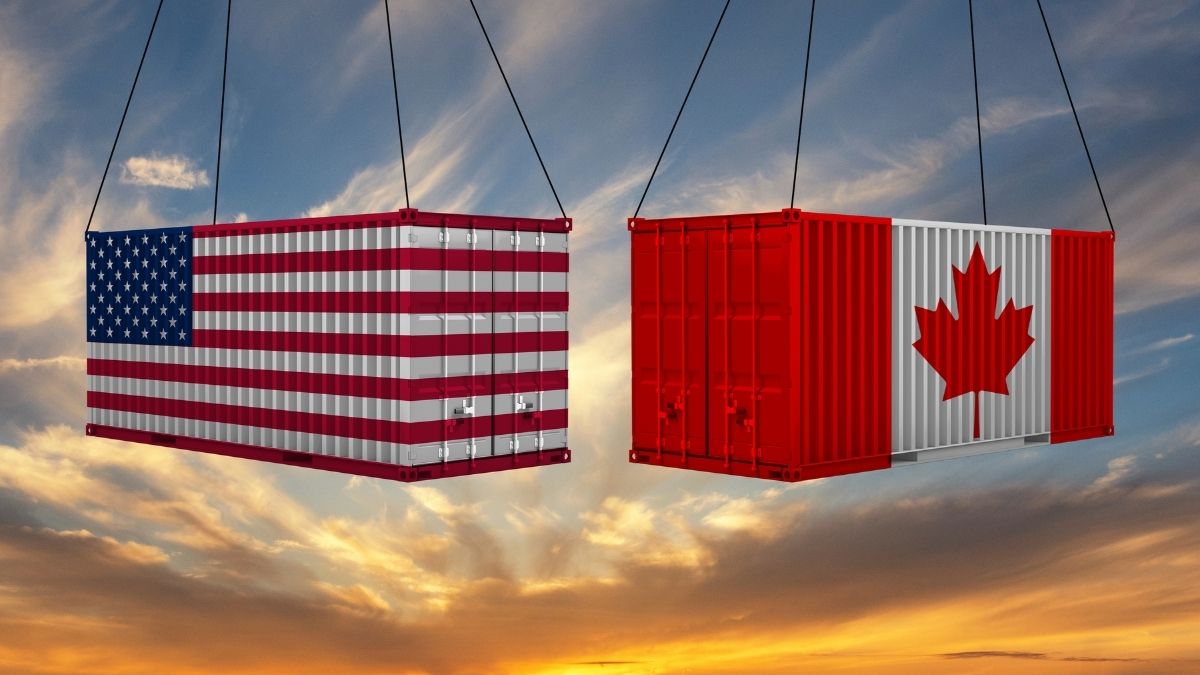
If you’re operating close to freight right now, volatility isn’t a surprise—it’s the baseline.
Weather events, trade policy, regulatory and economic implications on capacity, and overall global events are all in constant motion. What’s changed is the speed and overlap. These variables now shift simultaneously and propagate across networks in real time, leaving little room for static plans or delayed decisions. That’s the operating reality many shippers are navigating today. And it’s not going away.
Volatility Is Part of the System
One of the most important lessons from running a large surface transportation network is that supply chains are inherently shaped by external forces. No amount of planning eliminates variability entirely. The companies that perform best don’t try to predict every disruption—they build systems that can absorb change and adjust quickly when it happens.
Scale and proximity to the market matter. Operating across 37 million shipments a year and more than $23 billion in freight under management gives us a real-time view into how weather, capacity and demand are shifting across the network.
But visibility alone isn’t enough. The real advantage comes from what you do with that insight, and how quickly you can act on it.
Planning for Variability, Not Perfection
The most resilient supply chains I see share a common mindset: they plan for variability rather than stability. They assume conditions will change, and they design their networks, partnerships, and decision processes accordingly.
That’s where data and technology have become increasingly critical. Not as abstract analytics or static forecasts, but as operational tools that help teams see risk earlier, respond faster, and make more informed trade-offs when conditions shift.
Today, our AI agents operate across our network, executing millions of shipping tasks—from quoting and order management to appointments, tracking, and invoicing. These systems are trained on more than 100 trillion proprietary logistics data points and embedded directly into live operations, so intelligence turns into action, not just insight.
For customers, this translates into measurable improvements across their supply chains. By embedding AI directly into critical shipment workflows—orders, appointments, pricing, routing, and tracking—connected steps across the shipment lifecycle work in sync. When AI-powered orders and appointment workflows operate together, shipments move 11% faster to market on average and up to 23% faster, by securing better pickup appointments and matching freight with the right carrier sooner. These same workflows drive an average 7% increase in on-time pickups and up to 35% improvement in some cases.
More reliable pickups improve warehouse and loading dock throughput, reduce fines from early or late arrivals, minimize downstream delays and rescheduling, and enable more accurate ETAs and inventory planning. AI-recommended loads are also booked four times faster, helping customers respond more quickly when disruption hits.
Technology That Supports Better Decisions
What’s important to emphasize is that AI doesn’t replace experience or institutional knowledge, it reinforces it. The strongest outcomes come when technology handles routine, high-volume tasks at speed and scale, allowing our experienced team members to focus on exceptions, strategy and customer-specific solutions.
In volatile environments, predictability doesn’t come from eliminating uncertainty. It comes from having the tools, data, and partners in place to navigate it with discipline and confidence.
That’s where partnership matters most. When conditions are stable, logistics can feel transactional. When markets shift, customers rely on partners, like C.H. Robinson, who are close to the market, see changes early, and help them adapt in real time.
Volatility is part of how supply chains work. The advantage belongs to companies that are built to operate through it.